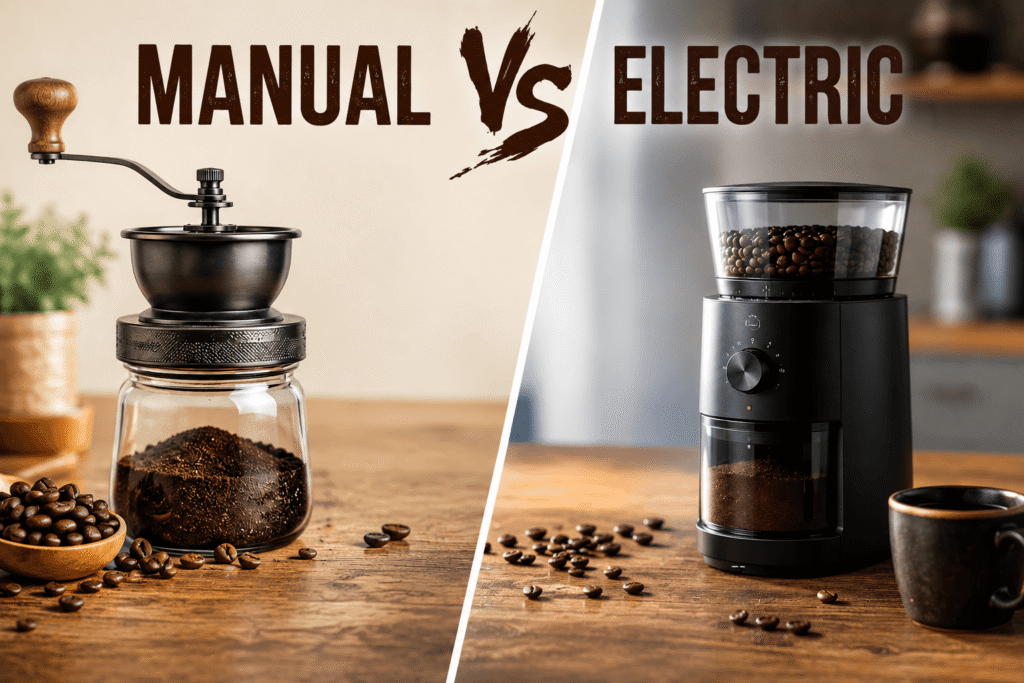
If you’re trying to make better coffee at home, one of the smartest upgrades you can make is your grinder. While many people focus on beans or brewing methods, a quality grinder plays a huge role in flavor, consistency, and overall cup quality. When comparing manual vs electric coffee grinders, the right choice depends on your budget, brewing style, and daily routine.
In this guide, you’ll learn the key differences between manual and electric coffee grinders, including grind quality, convenience, noise, portability, and which option is best for your brewing method.
Why Your Coffee Grinder Matters
Before comparing grinder types, it helps to understand why the grinding process matters so much. Coffee begins to lose its freshness within minutes of being ground.
A quality grinder helps you achieve:
- Better flavor extraction
- More consistent grind size
- Improved aroma
- Better control over brewing
- Fresher coffee every morning
Whether you brew with a French press, pour-over, AeroPress, espresso machine, or drip coffee maker, your grinder affects the final cup more than most people realize.
What Is a Manual Coffee Grinder?
A manual coffee grinder (also called a hand grinder) uses a hand crank to grind coffee beans manually. See top manual grinder picks.
Most quality manual grinders use burrs rather than blades, producing a more consistent grind for better extraction.
Pros of Manual Coffee Grinders
1. Better Value for Grind Quality
Manual grinders often deliver better burr quality for the price than electric grinders. For example, a $100 manual grinder may outperform a similarly priced electric grinder in grind consistency.
2. Portable and Travel-Friendly
Hand grinders are compact and lightweight, making them ideal for:
- Camping
- Travel
- Office use
- Small kitchens
Many coffee lovers pair manual grinders with portable brewing gear for fresh coffee anywhere.
3. Quiet Operation
Manual grinders are extremely quiet compared to electric models.
This is perfect for:
- Early mornings
- Shared apartments
- Offices
- Homes with sleeping family members
4. More Affordable
Entry-level manual grinders are usually less expensive than quality electric burr grinders. You can often get excellent performance without spending hundreds of dollars.
5. More Control and Connection
Some coffee enthusiasts enjoy the ritual of hand grinding. It creates a slower, more intentional coffee experience.
Cons of Manual Coffee Grinders
1. Slower Grinding
Grinding coffee by hand takes effort and time, especially for:
- Espresso-fine grinds
- Large batches
- Multiple cups
2. Physical Effort
Manual grinding can become tiring if you brew several cups daily.
3. Smaller Capacity
Most hand grinders hold fewer beans than electric grinders. This makes them less convenient for families or entertaining guests.
What Is an Electric Coffee Grinder?
An electric coffee grinder uses a motor to grind beans automatically with the press of a button. See our top picks for electric grinders
Electric grinders are available in:
- Blade grinders
- Burr grinders
- Flat burr grinders
- Conical burr grinders
For best results, coffee experts generally recommend burr grinders over blade grinders.
Pros of Electric Coffee Grinders
1. Fast and Convenient
Electric grinders can grind beans in seconds.
This is ideal for:
- Busy mornings
- Large households
- Espresso workflows
- Multiple daily brews
2. Consistent Results
High-quality electric burr grinders deliver excellent grind consistency for:
- Espresso
- Pour-over
- Drip coffee
- French press
Consistency improves flavor extraction and overall cup quality.
3. Easier for Espresso
Espresso requires extremely precise grinding.
Electric espresso grinders usually offer:
- Micro-adjustments
- Better fine grinding
- Faster workflow
- Less effort
4. Larger Bean Capacity
Electric grinders often hold more coffee beans, making them practical for brewing multiple servings.
5. One-Touch Simplicity
Push a button, and your coffee is ready to brew.
This convenience matters if you make coffee daily.
Cons of Electric Coffee Grinders
1. More Expensive
Good electric burr grinders can be costly, especially espresso-focused models. Budget electric grinders may produce inconsistent grind sizes.
2. Noisy
Electric grinders are much louder than manual grinders. Early grinding can easily disturb others in the house, especially in shared spaces or homes with light sleepers.
3. Larger Footprint
Electric grinders also take up more kitchen counter space than manual models, which can be a drawback in smaller kitchens or minimalist setups. Their larger size, added weight, and need for a nearby power outlet make them less convenient to store or move around, especially if you prefer to keep your countertops clear and uncluttered.
4. More Maintenance
Electric grinders have motors and electronic components that may eventually require repairs or replacement.
Manual vs Electric Coffee Grinders Comparison
| Feature | Manual Grinder | Electric Grinder |
|---|---|---|
| Price | Usually cheaper | Usually more expensive |
| Grind Quality | Excellent for the price | Excellent at higher budgets |
| Speed | Slow | Fast |
| Noise | Very quiet | Loud |
| Portability | Excellent | Limited |
| Ease of Use | Requires effort | Push-button convenience |
| Espresso Grinding | Good but slower | Best for frequent espresso |
| Batch Size | Small | Large |
| Maintenance | Simple | More complex |
Which Grinder Is Better for Different Brewing Methods?
Best for French Press
Both grinder types work well for the French press because this brewing method is more forgiving than espresso, especially for grind precision. However, manual grinders are especially well-suited for coarse grinding, as many quality hand grinders produce consistent, larger particles. This helps reduce sludge and bitterness while creating a cleaner, more balanced cup. See our guide to the best coffee grinders for French Press.
Best for Pour-Over Coffee
Many coffee enthusiasts prefer manual grinders for pour-over because of their precision and consistency.
Best for Espresso
Electric grinders usually win here due to:
- Fine grind precision
- Faster workflow
- Stepless adjustments
Best for Travel Coffee Setups
Manual grinders are the clear winner in portability because they are compact, lightweight, and do not require electricity to operate. This makes them an excellent choice for travel, camping, road trips, office use, or any situation where kitchen space and power access are limited.
Who Should Buy a Manual Coffee Grinder?
A manual grinder is ideal if you:
- Brew 1–2 cups daily
- Travel often
- Want quieter grinding
- Prefer a coffee ritual experience
- Have a smaller budget
- Mainly brew pour-over or French press
Who Should Buy Electric Coffee Grinders?
An electric grinder is better if you:
- Make coffee for multiple people
- Need speed and convenience
- Drink espresso regularly
- Brew several times daily
- Want effortless grinding
Blade Grinders vs Burr Grinders
No matter which grinder type you choose, burr grinders are generally far superior to blade grinders.
Blade Grinders
- Inconsistent grind size
- Can overheat beans
- Less precise extraction
Burr Grinders
- Uniform grind consistency
- Better flavor extraction
- More brewing control
For serious coffee lovers, burr grinders are worth the investment.
Final Verdict: Manual vs Electric Coffee Grinders
In the end, the best coffee grinder comes down to how you brew, how much time you have, and what matters most in your daily routine.
Choose a manual coffee grinder if you value:
- Portability
- Quiet operation
- Lower cost
- Hands-on brewing rituals
Choose an electric coffee grinder if you value:
- Convenience
- Speed
- Espresso performance
- Larger batch brewing
At the end of the day, both can produce incredible coffee when paired with fresh beans and proper brewing techniques.
The most important step is grinding fresh coffee at home instead of buying pre-ground beans. Once you taste the difference, it’s hard to go back.
Frequently Asked Questions
Are manual coffee grinders better than electric ones?
Manual grinders often offer better grind quality for the price, while electric grinders provide greater convenience and speed.
Do manual coffee grinders make better coffee?
Not necessarily. Both manual and electric burr grinders can make excellent coffee if they produce consistent grind sizes.
Are electric grinders worth it?
Yes, especially for espresso drinkers or households brewing multiple cups daily.
How long does it take to grind coffee manually?
Usually between 30 seconds and 2 minutes, depending on grind size and quantity.
What’s the best grinder for beginners?
A quality burr grinder — either manual or electric — is the best starting point for improving coffee flavor.
Affiliate Disclosure: Some of the links in this article may be affiliate links. This means that if you click through and make a purchase, I may earn a small commission at no additional cost to you. These commissions help support the site and allow me to continue creating helpful coffee content. I only recommend products I genuinely believe can provide value to readers.