
Introduction to Cold Brew Coffee
Cold brew coffee has emerged as a popular choice among coffee enthusiasts, celebrated for its distinct flavor and smooth characteristics. Cold brew coffee involves a slow steeping process by extracting flavors from the coffee grounds over a period of 12 to 24 hours.
The fame of cold brew lies not only in its taste but also in its versatility. Cold brew coffee can be enjoyable when diluted with water or milk. The brewing technique produces a unique flavor profile, with notes of chocolate and caramel that are often more pronounced than those in regular coffee. Many find it refreshing and easier on the stomach due to its lower acidity, making it an ideal option for those sensitive to acidic foods and beverages.
To prepare cold brew coffee, first, you will need coarsely ground coffee. Cold or room-temperature water is crucial in the brewing process, and a large jar or pitcher can serve as the brewing vessel. A fine mesh strainer to separate the coffee grounds from the liquid after the steeping is complete. With these simple items, anyone can embark on a rewarding cold brew coffee tutorial, allowing for personalized experimentation in taste and strength.
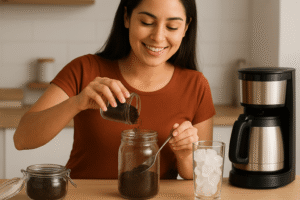
Equipment Needed
The next crucial component is water. Using filtered water can enhance the overall quality of your cold brew coffee, as it removes impurities that may affect the flavor.
In terms of equipment, having the right tools can significantly simplify the cold brew process. You will need a large jar or pitcher for steeping the coffee mixture. A quart-sized mason jar or a dedicated cold brew coffee maker are excellent options. Additionally, a fine mesh strainer is essential for separating the coffee grounds from the liquid. Coffee filters can work in conjunction to ensure a smooth brew, reducing any sediment.
Budget-conscious readers can use alternatives, as a kitchen sieve, a coffee sock, or even a clean cloth to filter the coffee. The method of filtration may vary, so feel free to choose what works best for you. Whether you are an avid coffee lover or just starting to explore the world of cold brew coffee, having the right ingredients and equipment is the first step to enjoying a delightful and refreshing beverage.
Cold Brew Coffee Preparation
Preparing cold brew coffee at home involves a simple yet effective process that maximizes flavor and minimizes acidity. The first step is to gather your ingredients and equipment. You will need coarsely ground coffee, cold water, a jar or pitcher, and a fine mesh strainer or cheesecloth for filtering.
Basic Ingredients of Cold Brew Coffee
- Coarsely ground coffee beans – preferably medium to dark roast for a richer flavor
- Cold or room-temperature filtered water
Optional Add-Ins
- Milk or cream (dairy or plant-based)
- Ice cubes
- Sweeteners (sugar, honey, maple syrup, or simple syrup)
- Vanilla extract or vanilla syrup
- Cinnamon sticks or ground cinnamon
- Cocoa powder or chocolate syrup
- Flavored syrups (caramel, hazelnut, pumpkin spice, etc.)
The base recipe only requires coffee + water, but the extras make it customizable to your taste!
Instruction
- Grind the Coffee
- Use a coarse grind (like raw sugar or sea salt texture).
- Too fine = over-extracted, bitter brew.
- Combine Coffee & Water
- In a large jar, French press, or pitcher, add the ground coffee.
- Pour in the filtered water.
- Stir gently to make sure all grounds are fully soaked.
- Steep
- Cover and let it steep for 12–24 hours at room temperature or in the fridge.
- Longer steep = stronger flavor.
- Strain
- Use a fine mesh strainer, cheesecloth, or French press plunger to filter out the grounds.
- For a smoother brew, strain twice.
- Serve
- Pour the cold brew concentrate over ice.
- Dilute with water, milk, or your favorite creamer
- Customize (Optional)
- Add sweetener (simple syrup dissolves best).
- Flavor with vanilla, caramel, cinnamon, or chocolate.
Cold brew concentrate can be stored in the fridge for up to 7 days in an airtight container.
Adjust this ratio based on your taste preferences or the size of your brewing vessel. Combine the coffee grounds and water in your jar, stirring gently to ensure all grounds are saturated. This method encourages even extraction of flavors throughout the steeping process.
Next, cover the container with a lid or a cloth to prevent contamination. Allow the mixture to steep at room temperature or in the refrigerator for 12 to 24 hours. The longer the steeping time, the stronger the flavor of your cold brew coffee will be.
When the steeping period is complete, strain the mixture through a strainer, and pour the steeped coffee to separate the liquid from the grounds. If you prefer a clearer finish, strain it twice.
Serving Suggestions and Variations
Cold brew coffee has a versatile foundation for creating a variety of delightful beverages. After you’ve successfully made your cold brew, consider enhancing it with various flavor additions and serving. Implementing these variations can transform a simple cup of cold brew into an exciting treat.
For those who like sweetness, add a splash of syrup, such as vanilla, caramel, hazelnut, honey, or agave. If you prefer a creamier texture, incorporating milk or cream is an excellent option.
Additionally, consider enhancing your cold brew with spices such as a dash of cinnamon or nutmeg. For an adventurous twist, try infusing your cold brew with unique flavors by steeping it with fruits like orange slices or berries, which can create a refreshing summertime beverage.
Should you find your cold brew too concentrated, feel free to dilute it with chilled water or ice. Keeping it in an airtight container in the refrigerator can preserve its freshness for up to two weeks, allowing you to enjoy multiple servings throughout that period.
By exploring different serving suggestions and variations, you can create a tailored cold brew coffee experience that aligns with your taste preferences, encouraging experimentation with flavors and presentations



Thank you for taking the time to write a comment! I’m glad you you enjoyed it.
Thank you for the comment! I really appreciated it.
Thank you!
Thanks for your thoughts!
Thanks! I will consider
Thank you!
[…] we dive into the best presses, here’s a quick refresher on how cold brew works using a French […]