Introduction
If you’re in the market for a French press, chances are you’ve come across Bodum and Espro — two of the most respected names in the art of press-brewed coffee. But which one deserves a spot on your counter? In this post, we’ll compare Bodum and Espro head-to-head, highlighting their strengths, trade-offs, and which brand might be right for different kinds of coffee lovers.
Why Compare Bodum and Espro French Press?
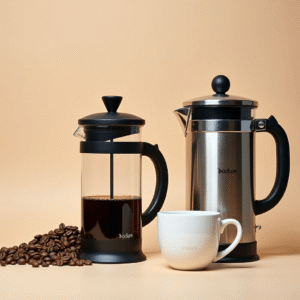
These aren’t just two coffee brands — they represent very different philosophies of press brewing:
- Bodum is the classic, design-driven pioneer. Known for its iconic glass presses (like the Chambord), Bodum has been a household name for decades.
- Espro, on the other hand, is the innovator. Their presses are engineered for performance, utilising patented double micro-mesh filters to reduce grit and over-extraction.
When you weigh tradition vs. technology, aesthetics vs. advanced filtration, the choice becomes more than “which looks nicer.” Let’s break it down.
Brand Deep Dive
Bodum: Heritage, Simplicity & Design
- Founded in 1944 by Peter Bodum, Bodum has been a key player in modern coffee culture for over 75 years. 1
- The company is renowned for its clean Scandinavian design and for using borosilicate glass across many presses. 1
- Bodum presses are typically single-filter, meaning they have one mesh screen when you press. This gives a classic French press mouthfeel and full-bodied flavor (but more sediment is common).
- One of their popular models is the Bodum Brazil French Press, which is affordable, simple, and reliable for everyday coffee brewing.
Strengths:
- Affordable and accessible
- Iconic design — glass carafes let you watch the bloom
- Lightweight and easy to clean
Considerations:
- Glass can break if mishandled
- Greater sediment due to the mesh design
- Less heat retention compared to insulated models
Espro: Performance, Precision & Innovation
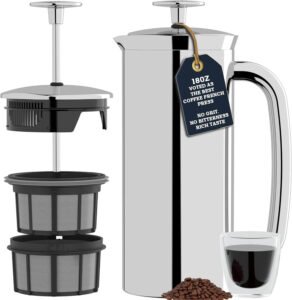
- Espro gained popularity by solving a problem with the traditional French press: too much grit and uneven extraction.
- They use a double micromesh filter system — one cup-shaped filter plus a finer mesh — which helps prevent extraction when you press, resulting in a cleaner, smoother cup.
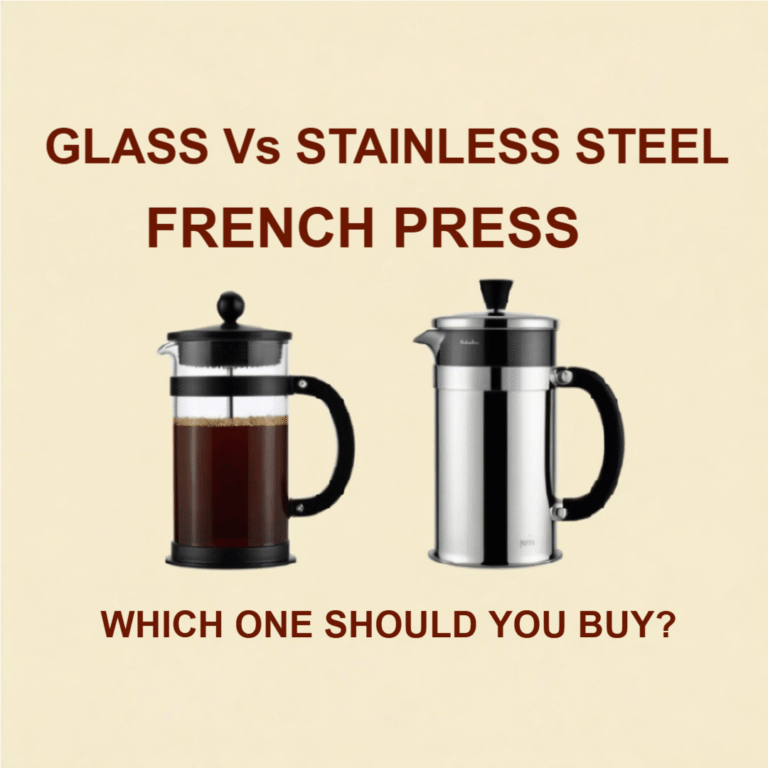
- Many Espro presses are made of double-wall stainless steel, offering excellent heat retention.
- A standout model is the Espro P7 French Press, which holds up to 32 oz and keeps coffee hot while delivering minimal sediment.
Strengths:
- Extremely clean, grit-free brew
- Double-wall insulation keeps coffee warm longer
- Durable build (especially in the steel model)
Considerations:
- Higher price point than basic glass presses
- More parts to clean (micro-filters require care)
- Heavier than glass Bodum models
Head-to-Head Comparison
Here’s a breakdown of how Bodum and Espro compare in key areas:
| Feature | Bodum | Espro |
|---|---|---|
| Filter System | Single mesh | Double micro-mesh |
| Sediment Level | Moderate to high | Very low — very clean cup |
| Build | Glass or stainless | Stainless steel or thick glass |
| Heat Retention | Moderate | High (with insulated models) |
| Durability | Glass is fragile | Steel is very durable |
| Price Range | More affordable | Higher, for premium filtration |
Which French Press Brand Should You Choose?
Here’s a quick guide to help you decide between Bodum and Espro based on what you care about most:
- Go with Bodum if you…
- Love a classic, elegant design.
- Don’t mind a bit of sediment in your cup
- Want to spend less and don’t need long-term heat retention
- Go with Espro if you…
- Hate gritty coffee and prefer a very clean cup
- Want a press that doubles as an insulated carafe
- Are you okay with spending more for better filtration and build quality
Real-World Thoughts: What Coffee Lovers Are Saying
From user reviews and coffee communities:
- Some Bodum users praise the simplicity and nostalgia of their Chambord or Brazil presses.
- Espro owners often highlight the dramatic reduction in grit thanks to their dual-filter system.
- A few Reddit users mention that while Espro’s P7 maintains temperature well, it requires more work to clean and can be heavier than glass models.
- On the other hand, Bodum’s support has received criticism for slow service when ordering replacement parts.
Which French Press Brand Is Better?
There’s no one-size-fits-all answer — because Bodum and Espro serve different types of coffee drinkers.
- Bodum is the beloved classic. It’s simple, beautiful, and effective.
- Espro is the performance-driven innovator. It’s built for people who want every last particle filtered out and don’t mind paying a little more for that precision.
If I were picking for myself, I’d reach for Espro when I want a clean, sediment-free cup, and Bodum when I want something lightweight, reliable, and elegant to leave on the countertop every day.
Final Thought
At the end of the day, the “best” French press is the one you’ll use, honestly — not the one that impresses other people. Whether you’re team Bodum or team Espro, both brands offer excellent quality, strong designs, and a way to elevate your everyday coffee ritual.
So pick the one that fits how you brew, sip, and live… and enjoy every rich, well-filtered pour.
Affiliate Disclosure:
This post may contain affiliate links. If you purchase through these links, The Coffee Gear Hub may earn a small commission at no extra cost to you. This helps support our site and allows us to continue creating helpful, honest coffee gear content.